Site Map Contact Us Home
 
 
Publications

SCVAS publishes articles about birding and conservation in its newsletter, The Avocet. See a complete list of online articles here.


Nest Box Articles
by Leda Beth Gray
Published in January 1998 in The Avocet

   • "Grandparenting" Chickadees and Titmice
   • About Backyard Nest Boxes

"Grandparenting" Chickadees and Titmice
by Leda Beth Gray

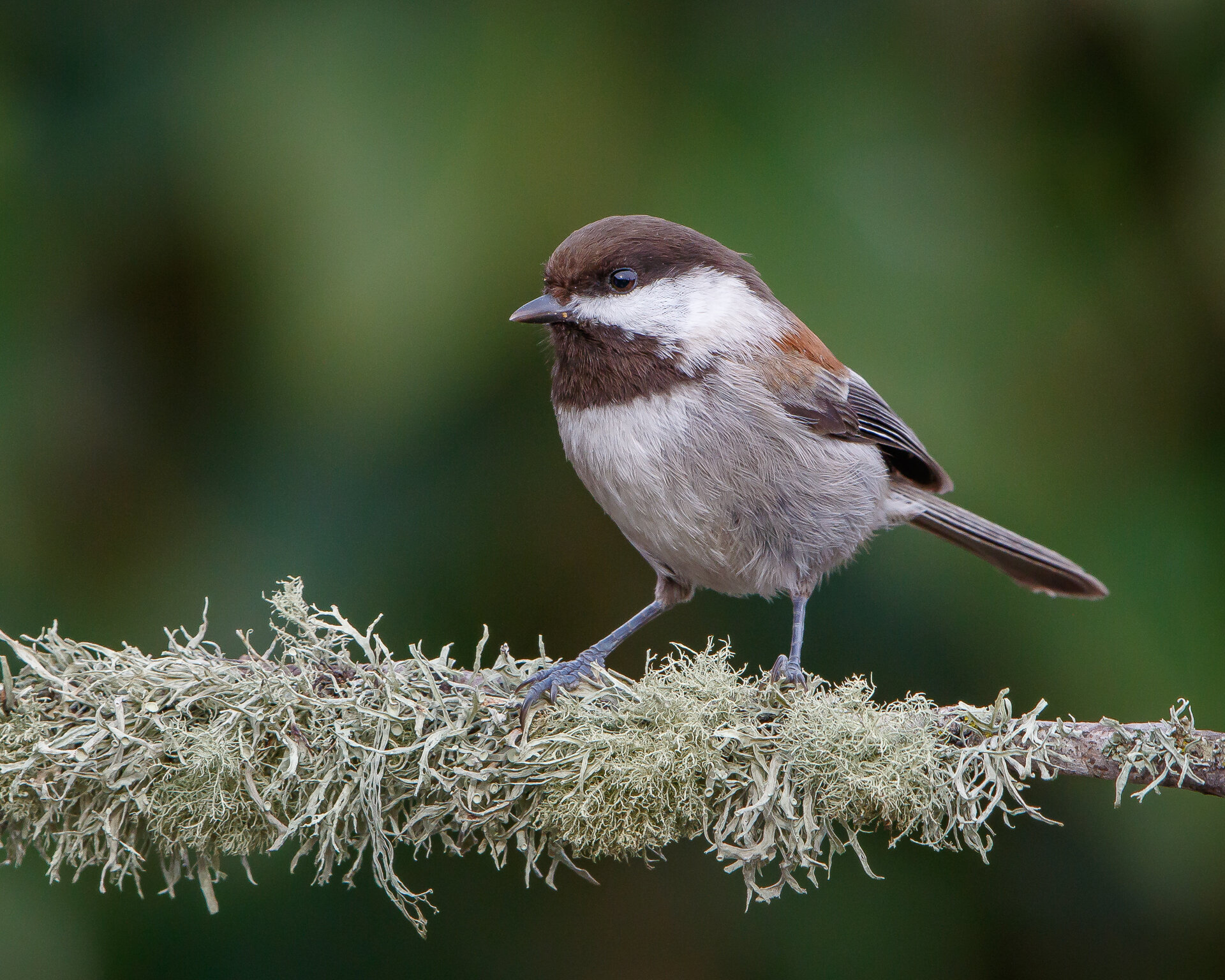
Now is a good time to put up nest boxes, especially if you hope to attract chickadees or titmice. The Oak Titmouse (formerly Plain Titmouse) and the Chestnut-backed Chickadee are two species in this area that begin investigating nest boxes in January, if not earlier. In addition, I have seen bluebirds investigating nest boxes as early as December at a local open space, so it appears that birds may investigate possible nest sites, in some cases well before their particular nesting season begins.

My husband and I have had a lot of fun over the past 4 years observing Chestnut-backed Chickadees nesting in our yard in Palo Alto. One reason we have enjoyed it so much is that the chickadees' nesting activities have been easily observable, allowing us to watch every phase of the process, all the way from collection of nesting material and building the nest to the parents bringing their fledglings back to our yard to show them our peanut and sunflower seed feeders. Our success has been great: two nestings for each of the first three years and one nesting this past year. For the two-nest years the time between the first batch of chicks fledging and a new pair moving in varied from more than a week to just one day! This was barely enough time for me to figure out that the chicks had fledged and be able to clean the nest box out for the next pair. I'm not sure why we haven't had titmice nest, as the nest boxes are appropriate for either species. My friend Sue, who lives in Menlo Park, has had both chickadees and titmice use the nest boxes in her yard.

In January 1994, we purchased three nest boxes and placed them in various locations in our standard sized suburban back and front yards. We had read that chickadees and titmice would not generally nest in close proximity to one another, but wanted to increase our odds of having selected an attractive location for either chickadees or titmice. The directions that came with the nest box told us to put non-aromatic wood shavings in the bottom of the box for the chickadees or titmice to remove, I guess so they can feel like they are excavating a cavity.

We were delighted with almost immediate interest from both chickadees and titmice popping in and out of the houses. We spent a lot of time sneaking around, hiding and peeking around corners to watch their activities. Sue had put her nest boxes up at about the same time, so we were excitedly exchanging information over the phone about what we observed. We saw evidence of sporadic removal of a few of the wood chips, but after a while we gave up trying to figure out who was going to do what in which box because this went on for weeks. Finally in late February, it was obvious when a pair became seriously interested in one of the nest boxes in my yard. They began systematically removing the wood shavings, carefully placing them on bushes and tree limbs distributed around our own and our neighbors' backyards. Three days earlier, titmice were doing the same thing in Sue's yard, and it turned out that she would share her observations of her titmice with me, and each time within a few days our chickadees were doing the same thing.

Within a day or two of removing the wood shavings, the chickadees were making beeline trips back and forth between the nest box and our neighbor's yard, carrying wads of something. I peeked through the fence and saw that the chickadees were stealing peat moss out of the bottoms of the neighbor's hanging baskets. Some of the wads weren't that small, sometimes comically large in comparison to the size of the chickadees making them look really strange when they flew past. Definitely enough to make anyone do a double-take.

Then they began working on the little bunches of cat hair that I had combed from my cats and attached to tree limbs around the yard with those twisty-tie things from the grocery store. By far they preferred Sta-Puft's long, pure white fur, tugging off huge tufts and flying off to the nest box with giant white puffs of fur. Oak Titmice making a nest somewhere nearby came to the yard and also helped themselves to the fur. In addition, I discovered a titmouse on our back patio stealing stuffing out of an old chair that I had been thinking of reupholstering. Sta-Puft fur was equally popular in Sue's yard. Cat fur seemed to be the choice for the final nest layer.

After the nest-building activity came a period of low activity for a few weeks. Many times I sneaked up close to the nest box to listen for baby voices. It seemed like it was taking forever. I need not have worried; it was very obvious when the chicks had hatched. This occurred right on schedule within a few days of Sue's titmice. The parents were going in and out of the box with some kind of insects or spiders in their beaks. They took turns, often with one waiting on a nearby tree limb for the other to exit. I could hear the baby voices by moving close to the box as the chicks begged for food after one of the parents had gone in. They were faint at first but grew louder very quickly. It was interesting to me that, during this time of feeding chicks, the chickadees rarely if ever visited the peanut or sunflower seed feeders. They seemed to have switched to a totally insect diet, which is what they were feeding the chicks. Sue has observed that the titice in her yard did occasionally appear to take sunflower seeds to the chicks.

A few weeks later I knew the nestlings must be close to fledging because they were quite loud when a parent showed up with food, and I could see them jumping up and down inside the box, their little faces passing the entrance hole. Occasionally one would jump up to the entrance hole, and look out. Also, the parents began feeding them suet from our suet feeder during this time period just before fledging, a pattern that I've seen repeatedly with all the other nestings as well. We decided that it was the chickadee equivalent of going to a fast food restaurant to feed voracious teenagers. The chicks fledged at between two and three weeks from the time of hatching, by the middle of April. Sadly, we didn't see it happen; the box was just strangely quiet and deserted one morning when I went to check it. Happily, within a few days a new pair had moved into the box.

Sue saw her Oak Titmice fledge and actually caught it on videotape. She was trying to videotape the nestlings looking out of the nest box hole and all of a sudden they began popping out and flying to nearby branches. She told me that the parents would fly at the fledglings almost to the point of seeming mean, apparently in an attempt to keep them moving and herd them in a particular direction. Scrub Jays, in particular, pose a serious threat to the chicks, and the parents were well aware of that.

My husband and I had read that it is important to remove the old nest materials before a new pair move in because mites can get established in the old nest and attack the nestlings. We hadn't acted quickly enough this first time, surprised to get new tenants so soon, so we ended up cleaning the nest box after having seen another pair already bringing nesting material into the box. The interruption didn't faze them at all, they pulled out some of the shavings we put in, then continued working on their nest

After the first chicks fledged, the whole family disappeared from our yard for a couple of weeks. I was disappointed. I had wanted to see the fledglings. Then all of a sudden, we had many visits to our yard by a group that I presumed to be our chickadee family: two adults and six (!!) youngsters. How they ever fit that whole group into the nest box I will never know. I could tell which were youngsters and which were adults because the adults were still stuffing suet into the juveniles, and the juveniles had chickadee calls that weren't quite right. They kept these baby calls for weeks, long after they were visiting the feeders on their own. I wondered if the parents had been teaching the fledglings how to get insects before they taught them about bird feeders (like when my brother, Al learned to be a cook in the Coast Guard - they taught him how to make everything from scratch, then when he went out on ships all of a sudden he had mixes and frozen or canned prepared foods).

Our second batch of chickadees fledged in June, and we had groups of young chickadees visiting our feeders for the rest of the summer. They retained their baby voices for a long time, so I could always tell when they were around. In addition they would visit the peanut feeder in groups with several perching on it at once, something adult chickadees don't seem to do. The whole nest box experience was very satisfying for us, giving us a rather proud, grandparent sort of feeling, very different than the usual birding experience.

I should mention that I did stoop to the point of chasing off and scolding Scrub Jays that tried to harass the chickadees during their nesting. So much for letting nature take its course. They seemed to handle the jays pretty well on their own, though, giving agitated alarm calls and refusing to approach the nest box while the jays were around. Each time the jays seemed to lose interest in just a few minutes and then the chickadees would go about their business. Occasionally a jay would try to figure out a way to perch near the nest box hole but, due to the box design and placement, they were not able to do so. For tips on nest box design and placement, read on.


About Backyard Nest Boxes by Leda Beth Gray

The main design element to consider when selecting or building a house for chickadees and titmice is the entrance hole size. The rest of the nest box dimensions and construction details recommended in books on the subject are fairly standard. However, some books recommend 1 1/8 inch for chickadees and 1 1/4 inch for titmice, and at least one recommends 1 1/8 inch for both species. My friend Sue, who has had Oak Titmice nest in a box in her yard, noticed that the Oak Titmice were able to fit through the 1 1/8 inch opening and were building a nest in the box, but pecked at the hole, apparently trying to enlarge it. After Sue obligingly enlarged the entrance hole to 1 1/4 inch, she observed House Sparrows looking in the opening and investigating the nest box. This induced her to put a mask over the hole effectively reducing the size back to 1 1/8 inch, which precluded the sparrows. The titmice continued their nesting activity through these changes.

Christmas Bird Count Data show a decline of about 4 percent per year in the San Jose count circle over the last 30 years, but no detectable trends in the Mt. Hamilton and Palo Alto circles. In addition, Interior Department Breeding Bird Survey Data show a few percent per year decline of the Oak Titmouse in California over the same time period. So it is worthwhile to consider whether you will be able to offer the Oak Titmice a 1 1/4 inch entrance hole without competition from House Sparrows. Some books suggest that House Sparrows can be discouraged by repeatedly removing their nesting material. Other cavity nesters can also be attracted to this larger size opening including nuthatches and wrens.

Choosing a site for the nest box is extremely important. It was suggested on the directions that came with one of the boxes we purchased that it receive sun for roughly half the day. Our successful box is located in a spot where it receives late morning and noon sun and afternoon shade. I have seen other successful boxes that were in light shade all day. Not providing a perch either on the box itself or right next to it is also very important because this keeps predator birds such as the jays from being able to land in a convenient spot to stick their heads into nest box holes or otherwise disrupt nesting activities. Our chickadees could deal with some jay aggression, but we suspect that they would not stay with a nest box location that provided easy access for jay attacks.

It is important to place the box where it will be safe from four-legged predators. Our successful box is mounted on an exterior porch wall, where it would be difficult for any climbing animals such as cats, raccoons or rodents to reach it. A second box in our yard that was successfully used one time is hanging from a sturdy tree branch in a position that is sufficiently far away from other tree branches so as to be out of the reach of predators. Sue has her nest boxes mounted on poles, with baffles on the poles to keep animals from climbing up. She found out through an unfortunate experience of having a nest of titmice disappear overnight that it is important to keep branches trimmed well away from the nest box locations. A secondary but important consideration in locating nest boxes is visibility from your house. It is very rewarding and entertaining to be able to view nesting activities from windows, and this makes it more convenient to monitor the boxes, especially for elderly or disabled bird watchers.

It seems to be a good idea to put a layer of small non-aromatic wood chips or shavings in the bottom of the box for chickadees and titmice to remove. As mentioned in the above article, the birds seem to think they are excavating the cavity. As careful as they often are to dispose of the chips in various locations away from the nest, they usually still drop enough to be visible - a telltale sign that nesting activity has begun. Even though chickadees appear to be excellent housekeepers, it is important to remove the nesting material when the nestlings have fledged in order to get rid of mites that may have gotten a foothold in the nesting material and which could attack the next batch of nestlings. The box should be completely swept out and new wood shavings put in.

One thing that has very entertaining results, is to put out nesting materials for the birds. A suet basket is a handy way to do this, or just using the wire "twisty ties" to fasten the materials to branches around the yard. Cat hair is ideal, as is sphragnum peat moss. Other types of hair, plant down, and cotton stuffing out of chairs (natural materials are best) may also be accepted. Watching birds collecting these materials is very entertaining. Putting out suet toward the end of the nesting cycle gives chickadees and titmice a "fast food" option when feeding voracious youngsters that are just about to fledge. It is important not to let it spoil in warm weather. I keep blocks of suet in the freezer and only put out portions of blocks at a time to minimize spoilage.

One final note is that it is a good idea to keep records about the nesting activities in your yard. You will then be able to compare the timing of nesting activities in your yard from year to year. In addition SCVAS is interested in receiving data on the timing of nesting activities of cavity nesters in Santa Clara County. The very successful Bluebird Nest Box program started by SCVAS last year turned out to benefit many other cavity nesters including titmice and chickadees. SCVAS is keeping records on these nestings and we would like to include data from any other nest boxes in the county as well. Please send any such information to the SCVAS Chapter Office. Good luck and have fun!!


Last modified on January 30, 2007.


What's New

Cavity Nesters - Nest Box Information: For those of you interested in supporting or expanding the Cavity Nesters Recovery Program, or for anyone just interested in some neat woodworking projects, check out the following articles:

Building Barn Owl Boxes.

Building Nest Boxes and Kits as a Group Activity.

Mapping Nest Box Locations with "Google Earth".

Using a Video Camera to Monitor Nest Boxes.

***********

Burrowing Owl Updates: Learn about the recent news and what's been happening on the conservation from for our local Burrowing Owl populations.

Quick Links
Found an orphaned or injured bird?
Click here and find out what to do

Sign up for our email "Action Alerts"

Back to the top


Join Us!  |  About Us  |  Calendar  |  Birding  |  Conservation  |  Kids' Corner  |  Education  |  Nature Shop

22221 McClellan Rd., Cupertino, CA 95014
Tel: (408) 252-3747 / Fax: (408) 252-2850